
Medical logistics in New Zealand is often misunderstood as a form of general freight delivery.
In reality, it is a specialised discipline designed to support healthcare services, clinical outcomes, and regulatory requirements across Aotearoa.
Hospitals, laboratories, pharmacies, research institutes, and medical device companies don’t move standard parcels.
They move blood products, diagnostic specimens, investigational drugs, temperature-sensitive pharmaceuticals, and patient-critical supplies.
That difference matters, particularly within New Zealand’s healthcare system, where geography, urgency, and compliance all play a role.
What Is Medical Logistics?
Medical logistics refers to the transport and handling of healthcare-related materials under controlled conditions that protect viability, compliance, and patient safety.
In New Zealand, medical logistics supports:
-
public and private hospitals
-
pathology and diagnostic laboratories
-
community and hospital pharmacies
-
clinical trials and research organisations
-
medical device suppliers
Medical logistics ensures consignments arrive:
-
within validated temperature ranges
-
within defined clinical timeframes
-
with documented chain-of-custody
- with clear accountability if conditions change
It is not just about delivery, it is about maintaining integrity throughout the journey.
Why Medical Logistics Is Different from General Freight in NZ
General freight services in New Zealand are designed for efficiency, volume, and commercial goods.
Medical logistics is designed for clinical reliability and risk management.
The focus is fundamentally different.
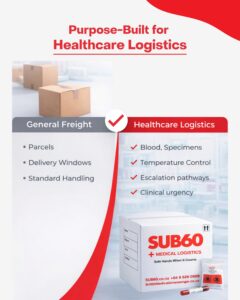
General freight typically involves:
-
parcels and commercial goods
-
standard delivery windows
-
generic handling processes
Medical logistics requires:
-
handling of biological and pharmaceutical materials
-
frozen, chilled, and controlled room temperature transport
-
temperature monitoring and documentation
-
chain-of-custody and traceability
-
escalation aligned to clinical urgency
In healthcare, a shipment can arrive on time, and still be unusable if temperature or handling requirements are not met.
What Makes Medical Logistics More Complex in New Zealand
Medical logistics in NZ introduces additional layers of complexity.
Temperature-Controlled Transport
Many medical consignments require frozen, chilled (2–8°C), or controlled room temperature handling.
Temperature excursions can compromise samples, invalidate clinical trials, or delay patient care.
Chain-of-Custody
Medical deliveries often require documented handovers and traceability across locations, particularly for pathology samples and investigational products.
Escalation and Urgency
Delays in medical logistics must be managed based on clinical impact, not delivery convenience, especially for same-day and urgent medical courier services.
Compliance and Governance
Healthcare organisations in New Zealand operate under strict governance and audit requirements.
Medical logistics providers must support compliance, not introduce additional risk.
What to Expect from a Medical Courier in New Zealand
Healthcare teams searching for a medical courier in NZ should expect more than fast delivery.
A medical courier should:
-
understand healthcare environments
-
recognise clinical urgency
-
manage temperature as a requirement
-
provide visibility and documentation
-
take ownership when risks arise
Medical logistics works best when it aligns with the way healthcare teams already operate.
How SUB60 Medical Supports Healthcare Logistics Nationwide
SUB60 Medical is a specialist medical courier service in New Zealand, built specifically for healthcare, not adapted from general freight.
Our medical logistics services support:
-
frozen, chilled, and controlled room temperature transport
-
validated medical-grade packaging
-
active temperature monitoring
-
compliance-grade workflows and escalation pathways
-
same-day and time-critical medical deliveries nationwide
This allows healthcare teams across New Zealand to move critical consignments with confidence.
Why Medical Logistics Matters in NZ Healthcare
In New Zealand’s healthcare system, logistics outcomes directly affect diagnostics, treatment decisions, research timelines, and patient care.
Medical logistics is a discipline because the stakes are higher.
Because in medical logistics, responsibility isn’t shared.
It’s owned.